Wednesday, October 20, 2021

A few of my favorite things


I was hoping to get a couple of these posts done before now, but in the chaos and feelings of a 3,000 mile move, some things get pushed to the side. I finally have the time and emotional reserves to sit and write a little, so while this isn't perhaps what I wanted it to be, at least it exists outside of my intentions. As you can tell, there were some technical difficulties, so please excuse the rough formatting.

Wherever we live, I genuinely appreciate people who love where they are; they give the best suggestions and most helpful tips, and can help you find the silver lining in a place maybe you never planned to be.  In that spirit--and maybe with just a touch of homesickness--I write this post to share some of my favorite things about the 49th state.  


 Local to Fairbanks, in no particular order.

  • Tanana Valley Farmer's Market.  Every Wednesday and Saturday from May to September, this is a delightful community market with fresh vegetables, local honey, beautiful flowers, and all the quirky local merchandise you might expect from people who spend five months a year snowed in.  We went almost every week just for the cream rolls and fresh kettlecorn.  
  •  
     

  • Chena Hot Springs. Always worth a stop.  It's not the poshest lodge, but the springs feel equally great in January when it's -20 or in July after a hike you really weren't prepared for. They also have various activities year round for whatever your adventure needs, whether that's riding horses, sledding dogs, hunting auroras or riding snowmachines.  They also do a good burger.
  •  

  • Fairbanks Shakespeare Company.  This is one of several local theater troupes, but definitely my favorite.  Every summer they have a production, and in the off season they have educational opportunities and the Bardathon in February.  I have great memories of sitting in their outdoor theater, ringed by old growth birch and spruce, watching Shakespeare under the midnight sun.
  • The Chena River is the heart of Fairbanks, and one of the best places to be.  During the summer, there are so many awesome opportunities to raft or kayak, often with dessert at the end.  During the winter, it's a popular skiing spot and the initial leg of the Yukon Quest dogsled race.  Breakup is amazing just because of the giant ice that ebbs and flows as Alaska's rivers wake up.  
  •  
    The Knotty Shop, Expressions in Glass, The Santa Claus House, The Craft Market Gift Shop, Arctic Traveler's, Roaming Root Cellar, Riverboat Discovery Shop, The Raw Fur Company
    ...so many awesome choices for all your gift or souvenir needs.  Some skew a little more touristy, some have a more local flavor (i.e., don't have "ALASKA" stamped on everything), but all are worth a stop.  The Raw Fur Company is included because, even though I don't personally agree with fur trapping, it's interesting to see all the different furs--from squirrel to skunk to caribou to bear and everything in between.
  •  
    Dogsledding.  I've already waxed poetic about it twice, so I'll spare you, but if you get the chance...well, the dogs love all the pets.
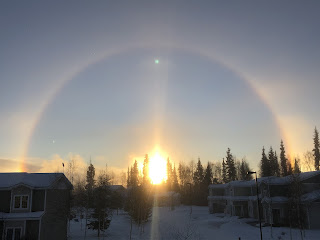
  • Northern Lights--and the sky in general--are breathtaking.  There are a ton of tours, but often you just need to be awake and looking up.  If you don't want to freeze to death, the lights are often the best during September and March, during the fall and spring equinoxes.  The sky delights every day.  I literally have over a thousand pictures of the sunsets, the pastel mornings, the sun dogs, full sun-halos, and ice pillars.  It was a blessing to have the opportunity to live somewhere that made me appreciate beauty every day.


  •  
  • Food trucks Fairbanks isn't exactly a foodie paradise, but there is a surprising amount of variety.  In addition to solid favorites like Lavelle's Bistro, The Silver Gulch, Jazz Bistro, Aurora Mediterranean, and The Pump House, there are a ton of food trucks and drive-up shacks that offer everything from schnitzel and spaetzel (Mein Diner) to gyros (Zorba on the Run) to hot dogs, falafel (Pita Place), and at least a dozen different Thai huts, each sketchy and delicious.
  •  
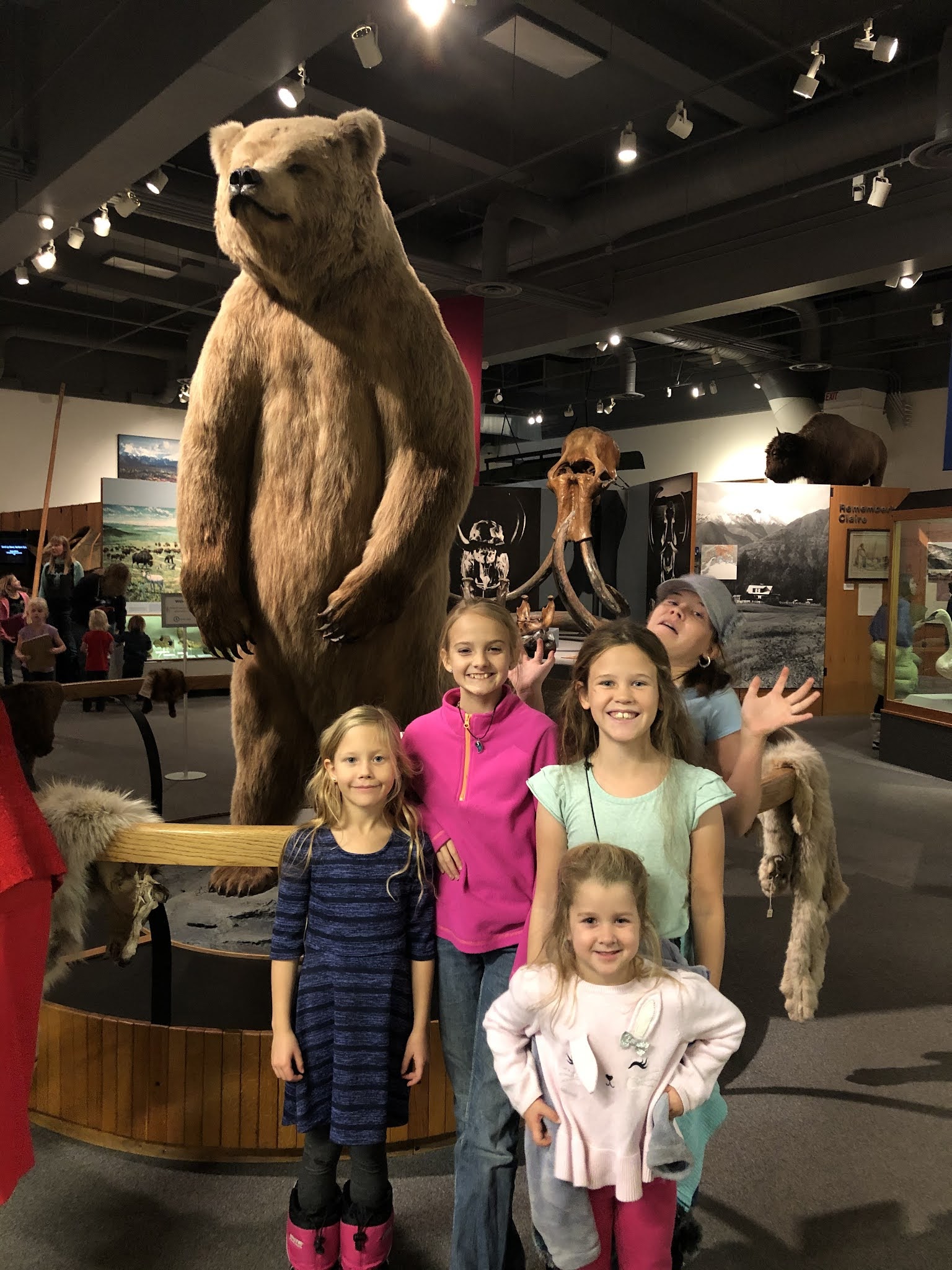
  • Museum of the North. A small but pleasant museum on the UAF campus that showcases the archaeology, culture, and art of Alaska.
  • Botanical Gardens.  Yes, plants grow up north.  A gorgeous place on a hill just below UAF and some of the hiking trails.  They put on multiple community concerts during the summer, but it's an equally nice place to turn the kids loose in the treehouse or find a bowery nook with a good book. 

  • LARS (Large Animal Research Station). Also located in the hills near UAF, this is a branch of the university dedicated to studying the large herbivores of Alaska, particularly caribou and muskox. They do daily tours during the summer, which are interesting with the added bonus of watching the knee-high mox calves do zoomies around their pen.
  •  
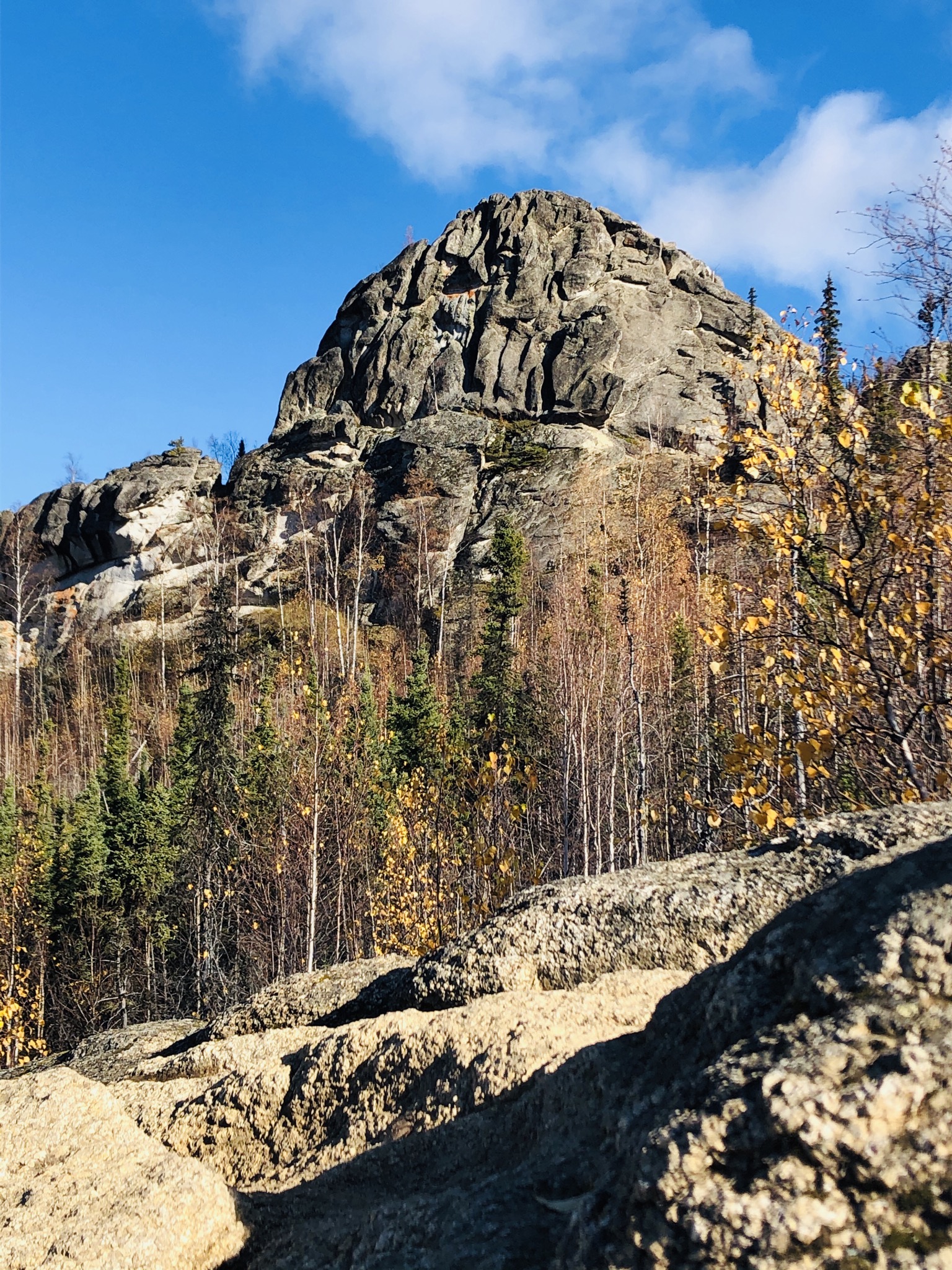
  • Hiking.  The view is always worth the burning thighs, bug-bites, and feeling like you're going to vomit.  Well, that last one's probably just me being out of shape, but still.

  •  
  •  
  • Creamer's Field. Lovely area for easy nature trails and seasonal bird watching.  I've been a dozen times and still love the Boreal Forest Trail.

Around the State--might have to drive an hour...or eight. Don't be scared.

  • Coastal Cities--Homer, Seward, Valdez.  You can't go wrong with any of these, it just depends on your flavor.  Homer is a quintessential beach town, with beachcombing, tide pooling, halibut fishing, and a quirky boardwalk on the Spit.  Seward also does fishing, but its bread and butter are wildlife and glacier cruises (which are definitely worth your time) and the Sea Life Center, which is also great. The road to Valdez is one of the prettiest drives in the state, with waterfalls and glaciers literally just off the highway; the town itself offers various cruises, kayaking, and fishing adventures, along with all the wild bunnies and quirks you'd expect in a town that routinely gets cut off from the rest of the state and left largely unsupervised during the winter.

  • Festivals and all the touristy stuff--Mermaid Festival, Chickenstock, Tanana Valley Fair, Alaska State Fair, Pioneer Days, Midnight Sun Festival, Fur Rendezvous, Highland Games,  Dark Winter Nights, World Ice Art Championship, Fairbanks Fiber Festival, the Gold Dredge, Riverboat Discovery, Christmas in Ice, all the various craft shows and excuses to get together... Alaskans don't waste the summer, so no matter where you go, check the local calendar and see what's happening. You won't regret it.  If you come up during the winter, do the same.  Fireworks are a winter thing in Alaska, and events keep rolling even during the snow and cold. Keeping busy is the best way to make it through winter.
  •  
  • Driving. There are roughly 14,000 miles of public roads in Alaska; that number includes all the state parks and forests.  Texas, which is half the size, has 675,580 miles of road.  I have never been disappointed driving a highway up north. The view is always worth it.  Just make sure you pack snacks and have a full tank.
  •  
  • Matanuska Glacier--Apparently some of the access has changed, but it was worth the cost back in 2020 to be able to walk out through glacial topography and actually onto the glacier, a remnant of the Ice Age that is over 20 miles long.  One of my kids' favorites out of all the random things we did.
  •  
  • Castner Glacier.  Always worth a hike. There aren't many places where you can just walk into a glacial cave.  The only down side is that there isn't a bathroom available...and that it's become more popular over the last couple of years.
  •  
  • Denali.  Some people find it overrated, but who cares?  That means there are fewer people on the park road.  I've enjoyed every trip I've made to the park.  Go in the spring to see animals, in the summer for hiking and the blueberry festival, in the fall for the colors, and in the winter if you really, really, really like snow. Make sure you stop by the kennels to see some of the hardest working park rangers.
  •  
  • Rafting the Nenana River.  It might be tame compared to some of the rivers in the lower 48, but it was amazing for my first time whitewater rafting.  Between the fun and informative commentary by the guide, the bucking rapids, and the opportunity to slip out of the raft at the end and test the wetsuit against the 35 degree water...*chef's kiss* 

  • Horse riding in Healy. Alaska doesn't exactly have what you'd call a "horse culture," but there are a couple of places around the state that offer some gorgeous rides and a unique way to experience Alaska.
  • Salcha River.  About an hour outside of Fairbanks you can find a trail that leads to a gravel beach in the bend of the river.  The water is cold but shallow enough to play in, there's enough room to bring a couple friends, and bathrooms are just a short walk away.


  • Extremes.  Some people have a hard time with the 20+ hours of darkness in December.  Others struggle with the 20+ hours of light in June.  There's at least a 100 degree swing every year between the summer high and the winter low; sometimes it's closer to 130 degrees.  I love it.  By the time you acclimate to one thing, the year has turned and things are already changing.


  • Glacier View 4th of July.  Shooting cars off a cliff?  Funnelcake and woodfired pizza? Ziplining? 'Merica.
  • Foraging/hunting.  Eating off the land is a big part of life even just recreationally.  There are some who live fully off of what they can hunt, trap, pick, or grow.  That's a little much for me, but a couple handfuls of berries (blue, cran, rasp, straw, or cloud) are a good snack.  I also recommend a cup of birch sap if you are offered one.  And if you ever get invited to help process a critter or two with your neighbors...Do it.

  • People in general. Alaskans are fabulous. They generally keep to themselves and don't like being told what to do, but if you ask for tips or express appreciation about their state, they are full of hilarious stories and good suggestions for anything you might want to do.  They are quick to help in an emergency, and resourceful as all hell.


Wish list...because four years wasn't enough to see everything.

  • Whittier.  A coastal tourist town that specializes in cruises and can only be accessed by road through a one way 2.5 mile long tunnel under a mountain.
  • Juneau, Ketchikan, Skagway, and the rest of the Inside Passage. We never made it down to southeast Alaska, but it's a world apart from the interior and has a flavor all its own.  Some places are only accessible by plane or ferry.
  • Tongass National Forest--part of the largest temperate rainforest in the world, and the largest national forest in the U.S. It also has seasonal hummingbirds.
  • Utqiagvik (Barrow) and the Arctic Ocean.  Who wouldn't want to go to the northernmost city in the U.S. and step in the Arctic Ocean?
  • McCarthy Road.  I regret two things about driving in Alaska.  First, that I didn't drive the Dalton to completion in Deadhorse, and second, that I didn't ever make it down to the McCarthy Road in Wrangell-St. Elias National Park.  It's second only to the Dalton for its remoteness and the rough conditions of the road.  It winds through some of the most beautiful mountains in Alaska, and ends at an abandoned mining town.
  • Kobuk Valley National Park.  The only sand dunes in the world above the Arctic Circle, and only accessible by plane.  Freaking cool.
  • Katmai.  Remember that scene about hundreds of grizzlies guzzling salmon in that documentary you watched?  It was probably shot at Katmai National Park or the neighboring Lake Clark National Park, both of which are a plane or ferry ride across Cook Inlet.  All the bears, all the time.
  • Alaska Native Heritage Center.  Less picturesque than everything else mentioned so far, but I somehow never managed to make it to this place that highlights and celebrates the various indigenous peoples of Alaska.  I've heard great things.
  • Fur Rondy (Fur Rendezvous). Truly a missed opportunity.  It's a 12 day festival held in Anchorage every February that involves a carnival, Native Alaskan games, Outhouse races, and the Running of the Reindeer (the Alaskan version of the Running of the Bulls) among other things.  I'm still kicking myself for not going.
  • Glacier Kayaking. Another big regret. There are various tours in Valdez and Seward that will take you out to one of the neighboring tidewater glaciers and you can paddle through drifting azure icebergs with seals sunning themselves on the ice and curious otters popping up next to you and even whales cruising the frigid 900 foot depths beneath your 1/2 inch thick plastic kayak. Yes please.

There's so much more, but I can only vouch for what I've personally done.  If you ever get a chance to go to Alaska, take it.  It may not be your forever place, but you'll find a little bit of magic.
 

Tuesday, August 10, 2021

Gold and Iron

Today's Tiara Tuesday.  It's supposed to be a whimsical but empowering day to shake off the mundane slog, to remember and celebrate the queen you are, to reclaim your power and individual sovereignty.
Except I don't feel like a queen. I feel like I'm in the thick of battle, exhausted, knee deep in mud and struggling to keep my feet. Everywhere I turn there is another chore, another weight, another need.  When I don't keep moving depression rolls in like a thick fog, and I don't know where to put my feet. I've been here for months, with no indication of when the war will end.

Tiaras are useless here.   They're too flimsy, their delicate gold and silver easily bent and broken, their lustrous gems scattered and lost.. Symbols of gifted power, they are meant to be seen--their value disappears in the lonely dark. 

Iron better fits a queen--heavy to bear, but strong.  Indestructible. Heavy with the weight of experience and suffering.  And you earn it.  You fight for it.  You choose it.  It isn't given to you, even if it is your birthright.  You get up every day, wipe the blood off your face, and grin at the enemy.

So I'm going to take a breath, square my feet, and try not to be distracted by the coulds and shoulds and failures.  I will focus on the enemy ahead of me, and forget the rest.  I'll take my iron crown, find comfort and purpose and strength in its weight.  That's not inspirational; it's a necessity.  I only lose if I stay down.

So take a breath, and straighten your damn crown, and keep fighting.  I'm right here with you.


The Lioness of Cintra, Calanthe
From The Witcher by Andresj Sapkowski

Museum Art Recreation Part 6: Here We Go Again.


Two years ago, in a desperate attempt to cope with Covid social restrictions, we embarked on an art recreation adventure that spiraled wildly out of control.  This year, during a much needed spring break, and at the request of my kids—who somehow managed to forget all the screaming involved and remember the photo shoots as “fun”—we revisited the project again, though on a more limited scale. It was a welcome escape from the wreck that was my life in March.  Thanks to the distractions of moving, I never got around to posting these pictures to the blog.  I'd say I'm sorry, but I would tell a lie.  Everything in its own time, right?  Right. And it's been kind of nice, looking back at some fun projects from a less stressful part of my life.

Anyway.  Enough talking.  Enjoy.  Outtakes included and clearly marked.


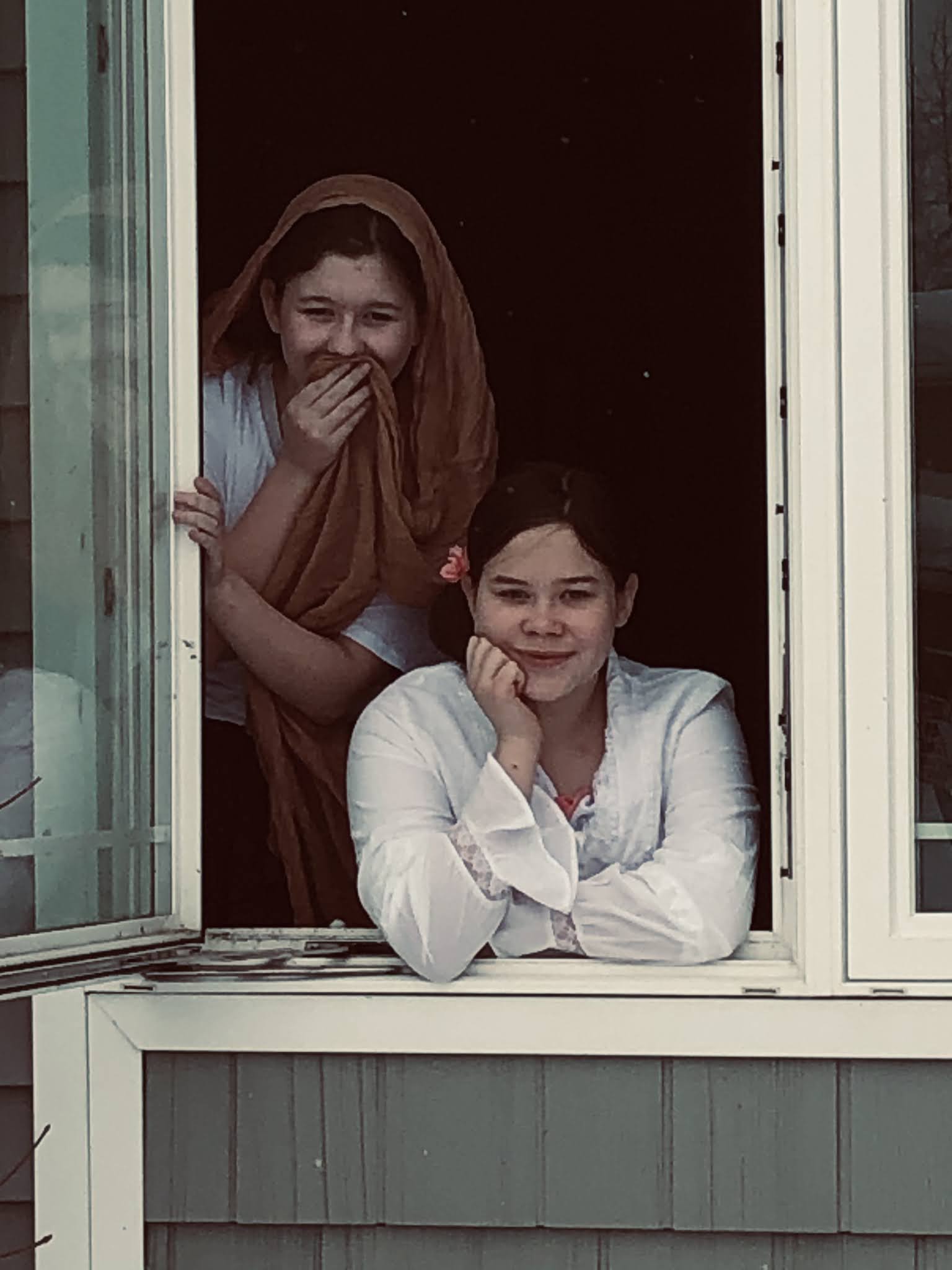
Two Women at a Window

Bartolome Esteban Murillo

Oil on Canvas, 1655-1660

Murillo was a Spanish Baroque painter famous for his prolific religious paintings as well as his works depicting women, children, and scenes of daily life.  His style is slightly luminous but realistic, and reflects the influence of the Flemish masters. 

I like this painting because of the expression in the women’s faces.  It is easy to imagine them admiring and laughing at some handsome young men in the street. The girls were good sports, hanging out of the window in subzero temperatures.


***


Self-Portrait at 26

Albrecht Durer

Oil on wood, 1498

This is one of three official self-portraits of Durer, a rather confident and prolific German artist during the Renaissance.  His works include engravings, altarpieces, portraits, watercolors, and books.  He is credited with introducing the Classical themes of the Renaissance into Northern European art. Reflecting the multi-faceted priorities and disciplines of the Renaissance, Durer also wrote multiple theoretical treatises on mathematics, perspective, and ideal proportions.

His self-portraits showcase his dramatic style as well as his high opinion of himself as an artist.  Self Portrait at 26 depicts Durer as a wealthy and respected artist after his first trip to Italy in 1498.  This wasn’t hyperbole on his part, as he was widely recognized across Europe by this point.

***


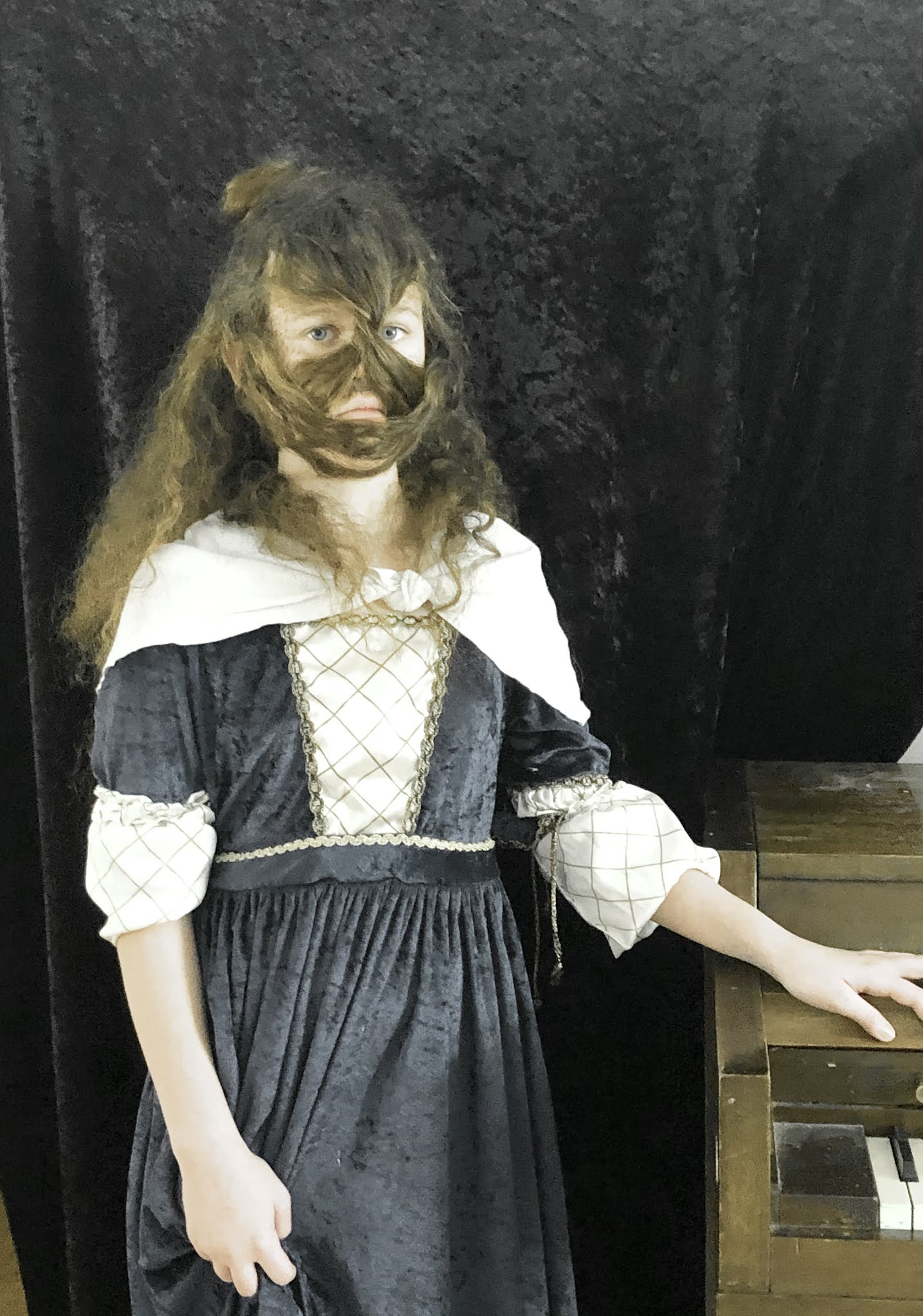
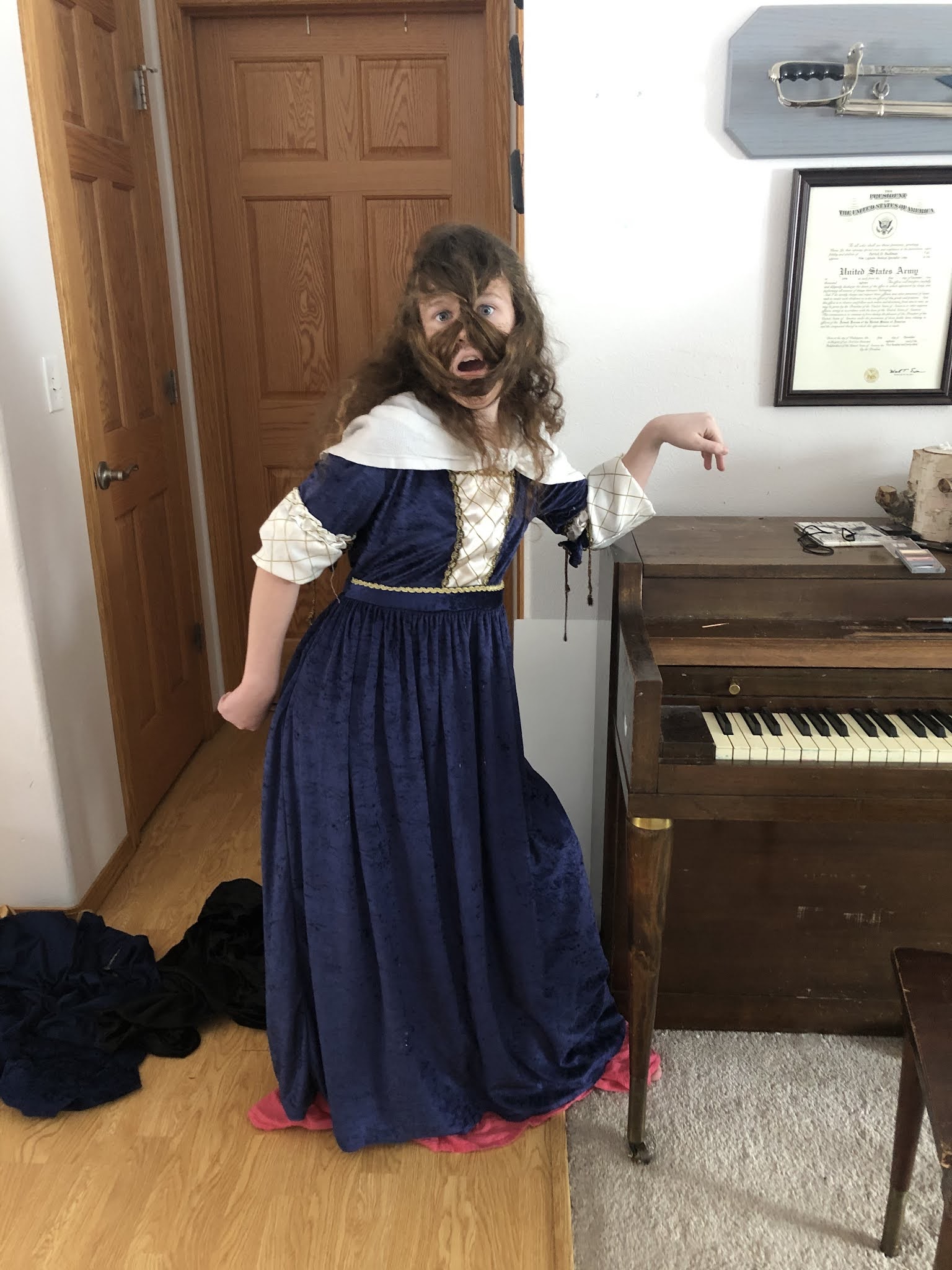
Depiction of Barbara van Beck

Richard Gaywood.

Engraving, approximately 1660.

Barbara van Beck was a German woman born in 1629 with hypertrichosis, a disorder that causes excessive body hair.  Her parents put her on display and charged people to gawk at her, but mitigated their terrible-parent status by also providing her with an education, something that many girls did not receive in that era.  As an adult she was known both for her appearance and for playing the harpsichord.  After 1668 there is no mention of her, and it is presumed that she died.  

Richard Gaywood was a prolific English engraver known mostly for his portraits and the frontis pieces and title pages for books. Engraving is the process of carving lines into a hard, flat material, usually metal. Prints can be made by applying ink to the engraving and pressing it to paper.


***


Le Despere (Desperation or The Desperate Man)

Gustave Courbet

Oil on canvas, 1843-45.

Gustave Courbet was a French artist who led the Realism movement, rejecting the Romanticism and conventions of the previous generation. His first paintings were of peasants and workers, often painted in the grand scale reserved for religious and historical subjects.  He felt that artists could only accurately depict the present, not the past or future, and that based only on their own experience.  For Courbet, Realism was not about capturing every exact detail perfectly, but rather about the emotional reality of the scene, the roughness and harshness of life, and that is seen in his brushwork.  

Courbet’s earlier work reflected his concern for the vulgar and often exploited members of society, drawing comparisons with Jean-Francois Millet and his most famous work, The Gleaners (which we did last year).  An active socialist, Courbet was exiled from France due to his involvement in the Paris Commune, a socialist group that took over Paris for two months in 1871 and refused to accept the authority of the French government.


Rocking the goatee.

Le Despere is a self portrait of Courbet.  If you decide to look up more of his works, be warned that there are a couple of graphic nudes that will pop up.  Realism, after all, isn’t about sexless dolls leaning on columns or surrounded by cherubs. Unfortunately.

***


In the Grass

Arthur Hughes

Oil on canvas, 1864-65.

If this looks familiar, it's because we have previously dabbled with Romanticism in general and Hughes in particular. Romanticism was an artistic movement that focused on emotion, nature, and individualism, and glorified the past.  It was a reaction to and rebuke of the Industrial Revolution.  Hughes was also influenced by the Pre-Raphaelite Brotherhood, which is reflected in his saturated colors, rich detail, and the casual pose of his subject.  Interestingly, the women in Pre-Raphaelite art are often red-heads, a trend we’ve seen as we worked through these recreations.  This isn't a surprising twist, as Romanticism was concerned with emotion and symbolism, and red hair is symbolic of passion and a touch of wildness.

Arthur Hughes led a fairly standard artistic life: he was born, he painted, he married one of his model/muses, and he died.  Upon his death he left over 700 drawings and paintings and 750 book illustrations.  He illustrated The Princess and the Goblin as well as two of Christina Rossetti’s (acclaimed poet and sister of Pre-Raphaelite Dante Gabriel Rossetti) books of poetry.

***


Perseus with the Head of Medusa

Benvenuto Cellini 

Bronze sculpture, 1545-1554.

Cellini was an accomplished soldier, goldsmith, draftsman, musician and artist during the Italian Renaissance.  Perseus is one of his most famous pieces.  Commissioned by Cosimo de Medici, the Duke of Florence, it depicts the Greek hero Perseus after he decapitated Medusa.  Medusa was a monster whose gaze turned men to stone.  Interestingly, this statue was placed so that the three nearest statues were of men made of marble.  Several of the surrounding sculptures (Judith and Holofernes, David, Hercules and Cacus) also depict characters who beheaded their enemies.  A certain motif sends a message, am I right?  The message: Don't **** with the Medicis.

Bronze was chosen specifically to make a statement about the wealth, skill, and technical abilities of Florence under the Medici family.  Bronze had not been used in decades because it was difficult to work with—it had to be cast, a lengthy process, and it often had to be made in pieces that were later joined together.  Cellini managed to cast it in one piece.


I love working with the blackout cloth, and this manic little Medusa is my favorite.


***


Me and My Parrots

Frida Kahlo

Oil, 1941

Magdalena Carmen Frida Kahlo y Calderon, better known as Frida Kahlo, is one of the most well known Mexican artists.  Her work draws heavily from the native culture of her beloved country and she is often considered a surrealist or magical realist because of the fantastical elements in her work.  A lot of her work depicts Kahlo herself.  Her struggles with chronic pain and life-long medical issues stemming from polio as a child and a bus accident at 18 also flavors many of her paintings.

Kahlo was very politically active, both as a communist and in the Mexicayotl movement, which sought to build a unifying Mexican identity.  Though she achieved international recognition as an artist in life, she became iconic after her death.

Me and My Parrots is a self-portrait of Kahlo with some of her many pets. The birds are a textural and emotional contrast to Kahlo.  She is smooth and simple and dignified, and the birds are detailed and ruffled and protective. The strong, bold colors and calm yet challenging stare are common in Kahlo’s work.

***


Self Portrait (portrait de l’artiste sous les traits d’un moqueur)

Joseph Ducreux

Oils, 1793

Joseph Ducreux was a French noble, painter, pastelist, miniaturist, and engraver at the French court before the Revolution.  He was first painter to the queen, and drew the last portrait of Louis XVI prior to his execution.  He resumed his career at the end of the French Revolution.  After 1760, though he catalogued his paintings meticulously, he didn’t sign many of them, which lead to many of his works being credited to other artists.

Ducreux was deeply interested in physiognomy, which is the idea that a person’s physical traits are indicative of their personality.  His less formal portraits, and particularly his self portraits, reflect this interest.  This painting, for example, shows the traits of a mocker.  It is immediately identifiable and unique compared to the more reserved expressions and poses common in formal portraiture.

We have two versions.  I forgot the "hair" in the first one, and I can't decide which version is better, so you get both.

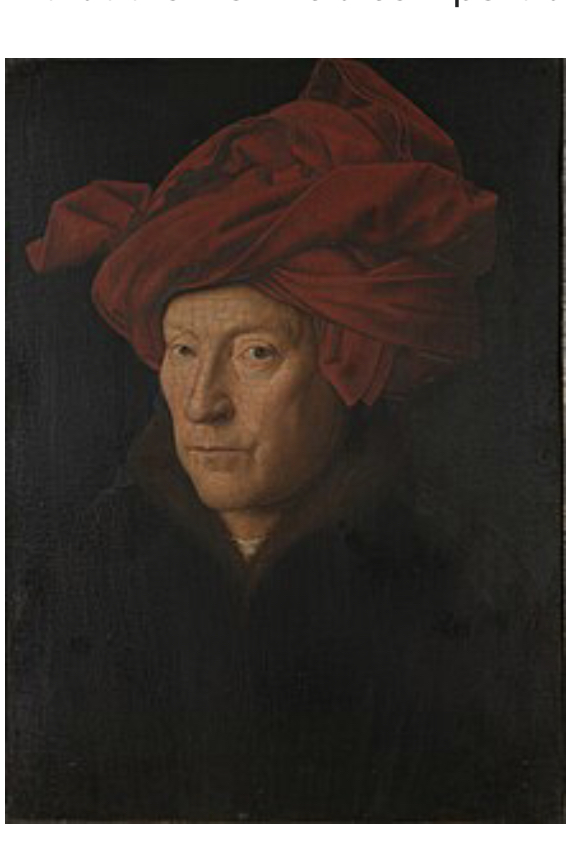
Portrait of a Man in a Red Turban

Jan van Eyck

Oils, 1433

Jan can Eyck was a Dutch painter who is credited as being one of the most significant painters in Northern Renaissance art.  Some of his most famous paintings include the Ghent Altarpiece, the Arnolfini Portrait, and his  Portrait of a Man in a Red Turban, which is widely believed to be a self-portrait.  His style in the beginning was heavily influenced by the earlier Gothics; over his life he focused more on naturalistic and realistic styles in his art, though he was not adverse to tweaking features to achieve more of an idealized look, particularly for women.  He was widely sought after for both religious commissions and secular portraits by the growing merchant and middle class, and also painted at the courts of two monarchs.  

Portrait of a Man in a Red Turban reflects van Eyck’s art at the height of his skills, with its incredible attention to detail and expression.  The man looks directly at the viewer, almost in challenge, which was highly unusual in portraiture at this time.  This, combined with van Eyck’s prominent signature Als Ich Can (“As Well as I Can” or “As Eyck Can”, a pun on his name) is what leads art historians to suspect that this is van Eyck himself, a piece to hang in his workshop and display his skills to prospective clients.

Though we call it a turban, the hat is actually a chaperon, with the ends tied up to keep them out of the artist’s way as he painted.  The lines and folds of the chaperon would be difficult to realistically render, so it is likely that this particular hat was also meant to showcase van Eyck’s ability.  The chaperon itself is a sign of the wearer’s wealth, and as such is a bit of a brag.

***

Now for one of my favorites....


Salvador Dali and Gala

Nikola Golubovski

Acrylics

I can’t find much about Nikola Golubovski except that he seems to be a contemporary Macedonian artist who flirts with Impressionism and surrealism like Dali.

Salvador Dali (Salvador Domingo Felipe Jacinto Dali i’ Domenech) was a Spanish (Catalonian) surrealist known for his ability as well as the bizarre imagery in his paintings.  Dali was fascinated by all types of art and made forays into many various genres from painting to jewelry to film, and his work often reflected his interests in dreams, the subconscious, sexuality, religion, and science.  His most well known piece is The Persistence of Memory in 1931 (for us less artsy types, it’s the melting clocks). 

Instantly recognizable by his sharply waxed mustache, Dali was often deliberately ostentatious, shocking, and unpredictable in his opinions and behavior.  He  was at different times a communist, anarchist, apolitical, and monarchist; he wavered repeatedly between being a devout Catholic, a mystic, and anti-clerical.  He was aware of his own notoriety and embraced it wholeheartedly. The love of his odd life was his wife and muse Gala, otherwise known as Elena Ivanovna Diakonova.

Surrealism was a cultural movement that began in Europe after World War I.  It was focused on exploring the juxtaposition of the subconscious and reality.  It was heavily influenced by Dadaism, a movement that began as a critique of the war and contemporary capitalist society, logic, and aesthetics that many of the involved artists saw as leading to the war.  They protested by diving into the irrational and celebrating the anti-bourgeois.

This is a lot of background information for a picture of a woman riding a mustachioed snail.

***


Unidentified Meme #1

No Idea

Probably oils.

We are coming to the end.  Here is the first of two requested memes.  I don’t know anything about the art, but it was fun to do.  It looks like it’s from the Middle Ages to me because of the flatness of the composition and the religious and historical topic, which is probably the martyrdom of some innocents or possibly Saints.


In the interest of educational integrity, I just put in another 20 minutes in Google.  I still got nothing.

***


Unidentified Meme #2

Somebody

Oils.  It's always oils.

The second meme recreation, which I also know nothing about. There are a lot of 18th and 19th century paintings of women.  After half an hour on Google, I gave up and just enjoyed the meme.  Five months later, that's still all I know.

***


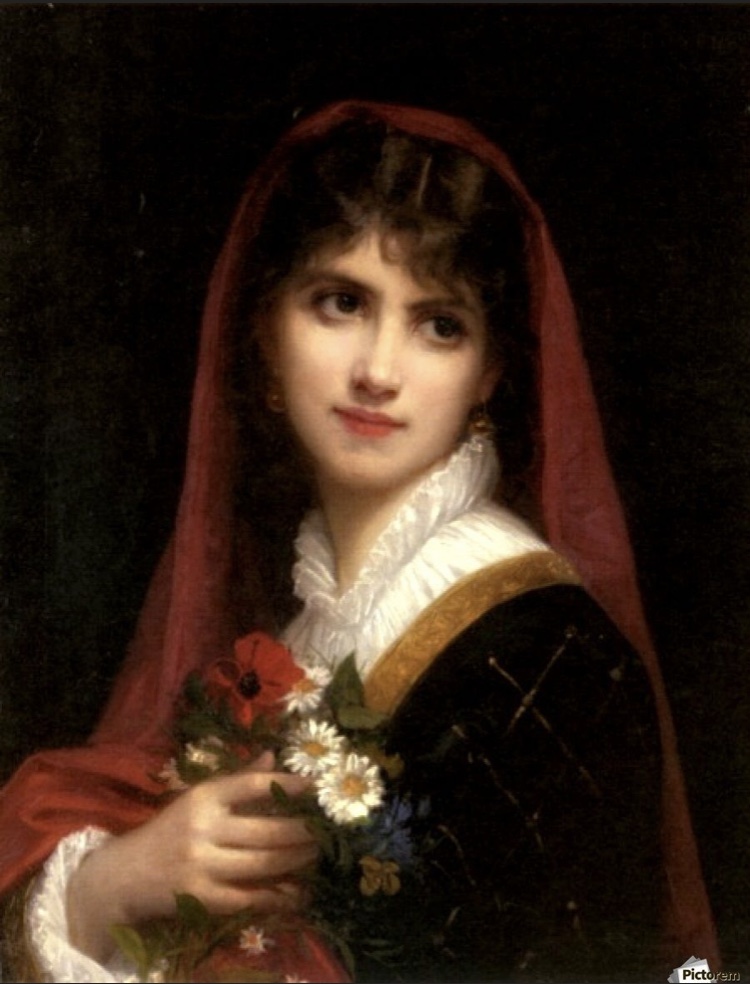
Young Beauty Wearing a Red Veil

Gustave Doyen

Oil on Canvas, 1880


Our second to final piece in this mini-adventure, this was painted by Gustave Doyen, a French painter in the late 19th and early 20th century.  There isn’t a lot of readily available information on him or the painting, so you’re spared the long winded description.  You're welcome.

***

And now we come to the end...


The Last Supper

Leonardo Da Vinci

Oil and Tempura on gesso, 1495-1498

The Last Supper was painted over several years on a wall in the dining hall of the Santa Maria delle Grazie monastery in Milan, Italy.  It was commissioned by da Vinci’s patron, Ludovico Sforza.  The mural was not painted as a traditional fresco, where the paint would be applied directly to wet plaster and allowed to dry and become, in essence, part of the wall.  Instead, da Vinci sealed the wall with layers of gesso, pitch, and mastic, then painted over it with oils and tempera, which is a quick-drying and translucent paint with egg yolks as a binder.  This type of paint led to the degeneration of the painting over the centuries; this, combined with multiple restorations over the years, means that very little of the original painting is left.  I've included two versions of the original so that you can see the detail.

As you could probably guess from the title, the painting depicts the last supper, when Christ and his disciples were marking the feast of the Passover.  Christ has just announced that one of his disciples will betray him, and they are reacting in anger and shock.  There are many unique details about this work, but I’ll limit myself to two: first, unlike many other paintings on this subject, Judas is not segregated in some way—he is in the thick of the group, shadowed but not separate.  The other is that da Vinci used perspective to draw attention to Christ and his preparation to institute the sacrament: his face is the vanishing point of the painting, and the lines of his face, gaze, clothing, and lighting draw the viewer’s eye to the bread that will represent his body and sacrifice.  Many of the apostles are based off of people da Vinci saw in Milan.  One apocryphal story even claims that Judas is modeled on a prior that was critical of da Vinci.  

This recreation was hands down the most challenging of either set. We had to conscript two other families, which stretched my costume box, and even then we’re still short of the thirteen needed.  The kids were great and made it work anyway. My personal favorite part of prep was the beard drawing; several of the kids flaunted them for the rest of the day.  


One of my favorite outtakes. "Really, Judas?  Really?"

The best crew.


And now for a bonus...


Der Schrei der Natur (The Scream of Nature, German)
Skrik (Shriek, Norwegian)
The Scream (everybody else)

Edvard Munch

Oil, tempera, pastel and crayon on cardboard, 1893.

Expressionism is an artistic movement that seeks to "express the meaning of an emotional experience rather than reality" (thanks, Wikipedia), and that intention is clear in The Scream. Edvard Munch was supposedly inspired by an "infinite scream passing through nature" as he watched a dramatic red sunset.  Like any good Expressionist, he had no compunction about distorting the realism in favor of capturing the subjective, emotional essence of the moment.  Over the years Munch created four copies of his most recognizable work, two in pastels and two painted.  Both painted versions were stolen and ultimately recovered.

The Scream is a fitting opus for Munch, who spent much of his life plagued by fears of congenital mental illness, anxiety, and poor physical health.  After receiving treatment for a breakdown in 1908, his anxiety and mental health stabilized and he found some measure of peace in his work and life.  His works were labeled as "degenerate" in Nazi-controlled Europe, but most survived the war and were ultimately returned to his native Norway.

And that's all, folks.

I don’t know if I’ll do it again next year, but if you run across a piece of art that makes you think of us, send it my way and call Manchester.  Or memes.  Memes could be fun.